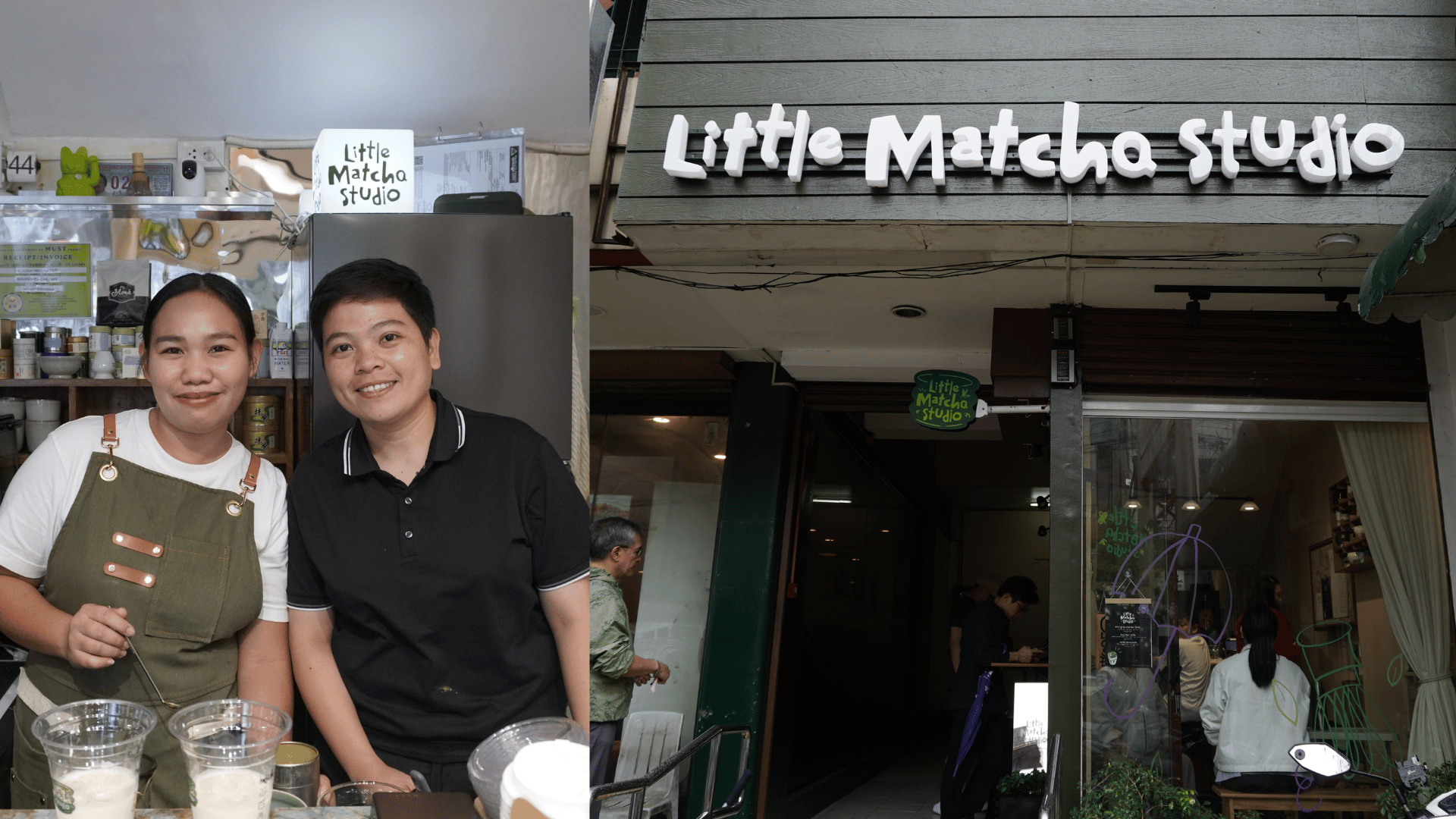
In the Philippines’ growing matcha scene filled with new café and creative drinks, Little Matcha Studio takes a more intentional approach. Founded by Paula Young as an ode to her personal appreciation for Japanese tea culture, the Filipino-owned café was established to give people a space to slow down and experience matcha beyond its growing popularity,
What began as a genuine interest in Japanese tea gradually became a space where Young could share that appreciation within a community. For her, opening a matcha café was never simply about selling drinks. “It came from wanting to share something I love, not just sell a product,” she shares.
That philosophy is reflected in the studio’s approach to the matcha experience. From its freshly whisked cups to its carefully selected products, ceramics, and intimate interiors, every detail is designed with intention. Young described the space as feeling like “a tiny café tucked away in Japan,” hoping that customers feel transported the moment they walk through the doors.
For first-time customers who want to appreciate matcha in its more traditional form, Young recommends the café’s Matcha Latte. Those who have a sweet tooth can try the Ichigo Matcha or Cookie Butter Matcha, while the Kuro-Hojicha offers an option for customers curious about Japanese tea beyond matcha.
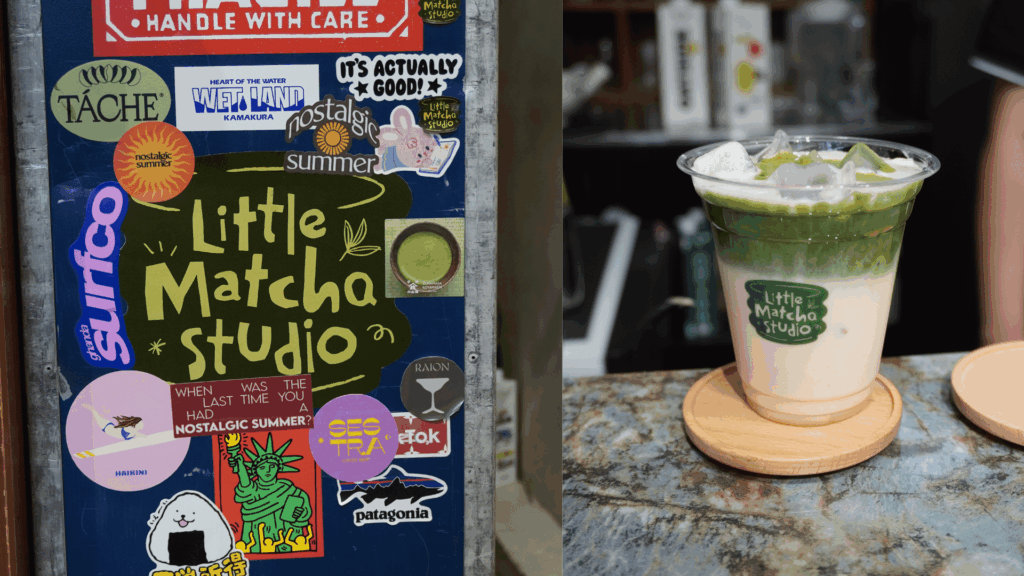
Behind every drink is an emphasis on quality and authenticity. When choosing the matcha they serve, Young says, “Quality and authenticity come first, always.” The café is intentional about where its matcha comes from, ensuring that every cup reflects the standards and traditions associated with Japanese tea.
For Little Matcha Studio, this attention to detail is part of what makes the café unique. It is not only about the drinks itself, but about creating an experience around it.
As a Filipino-owned café, Little Matcha Studio also finds meaning in introducing Japanese tea culture to a Filipino audience. Young sees the café as a bridge between the traditions behind matcha and the local community discovering it.
“It’s a privilege to be part of shaping how Filipinos discover and fall in love with matcha,” she says.
Young also believes Filipino-owned cafés bring something distinct to the matcha experience: warmth and hospitality. Rather than simply serving a drink, these spaces can create an environment where customers feel genuinely welcomed and cared for.
This personal touch, combined with an appreciation for craft and authenticity, can help shift matcha from being viewed as simply a trend into something people intentionally make time to enjoy.
For Young, the café’s most meaningful milestones are not necessarily grand achievements. Instead, they are found in the everyday moments–customers leaving the studio happy and satisfied with their orders.
Those small encounters are what make the work worthwhile. Through Little Matcha Studio, Young hopes to encourage customers to slow down, even if only for one cup, and develop a deeper appreciation for matcha and Japanese tea culture “not just as a trend, but as a ritual worth returning to.”
And the studio is not slowing down anytime soon. With its rainy-season menu already launched and more seasonal drops planned before the end of the year, customers can look forward to new ways of experiencing the studio’s take on matcha.
At its heart, Little Matcha Studio is built around a simple idea: a cup of matcha can be more than a drink. It can be a moment to pause, appreciate, and reconnect–with the craft, the culture, and the people sharing it.